
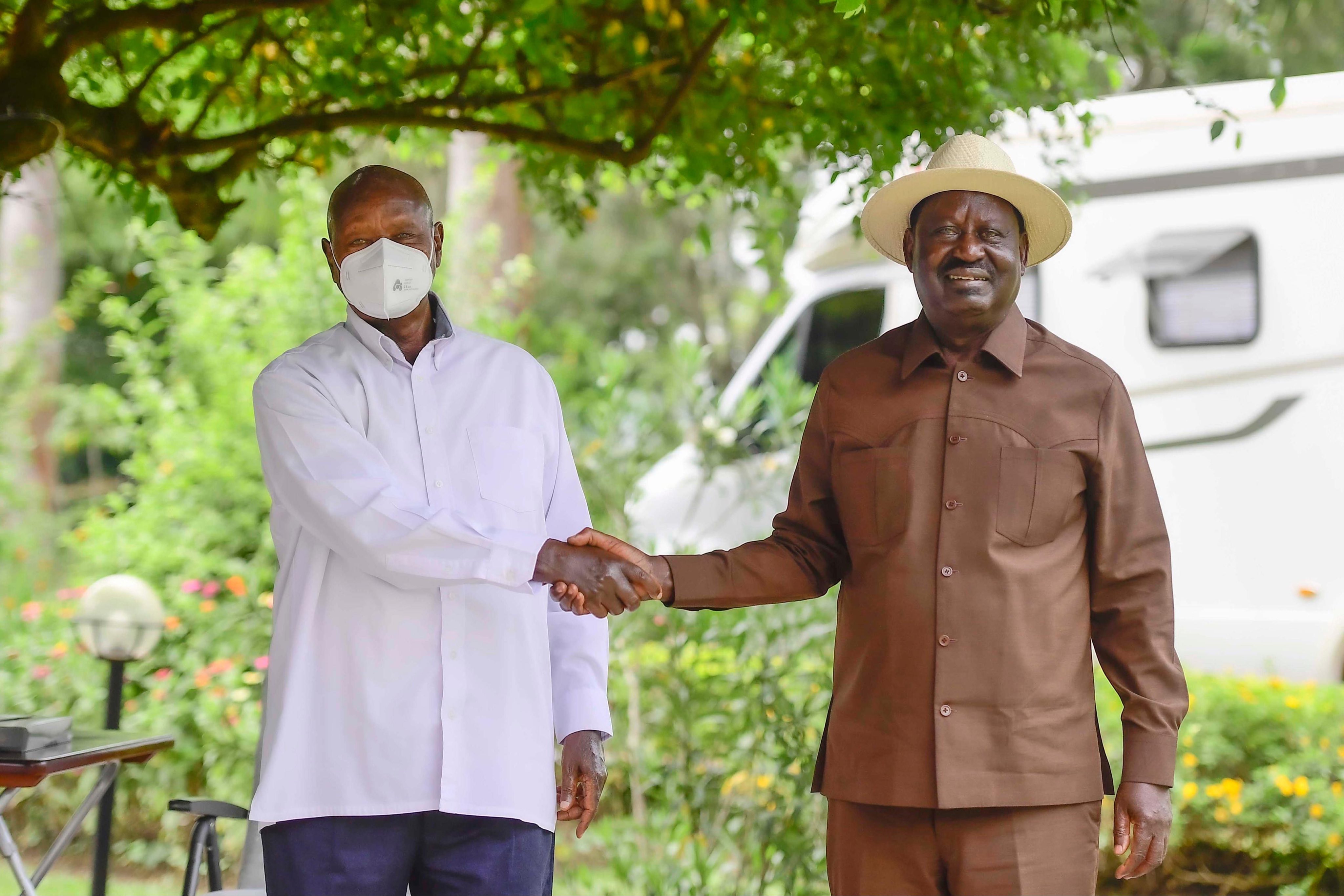
Museveni Mourns For Raila Odinga
By Bicholin K Musisi;
President Museveni has paid tribute to the late former Kenyan Prime Minister Raila Amolo Odinga, describing him as a “freedom fighter” and “Pan-Africanist” whose death marks the end of an era for East Africa’s liberation generation.
In a message shared on X (formerly Twitter), President Museveni said he received the news of Odinga’s death “with a lot of sadness,” hailing both Raila and his father, Jaramogi Oginga Odinga, as patriots committed to African unity and the dream of an East African Federation.
“Ideologically speaking, they have been with the patriotic and Pan-Africanist orientation. I have shared ideas with both of them,” Museveni said.
“It is, therefore, unfortunate that he has left at this moment. It is important for the young people to fill the void left by such historical fighters for Africa’s future.”
Museveni and Odinga first crossed paths during the late 1980s and early 1990s, when both men championed multiparty democracy and pan-African reform.
Museveni’s revolutionary rise in Uganda inspired a young Odinga, who admired his calls for African self-determination and regional unity.
In the early 2000s, Odinga often referred to Museveni as a “brother” and “elder statesman,” and both leaders appeared at regional summits advocating for deeper East African integration.
Odinga also played a visible role in East African Community (EAC) affairs, later serving as the African Union’s High Representative for Infrastructure Development — a position he used to push cross-border infrastructure and trade projects that echoed Museveni’s own integrationist agenda.
By the time of Odinga’s death on Wednesday, October 15, the two leaders had maintained cordial relations. Museveni’s message of condolence carried genuine warmth — not only for a political ally but for a fellow statesman who had shaped East Africa’s post-independence story.
As Raila Odinga is set to be buried on Sunday, October 19, 2025, his passing marks the end of a political era in which rivalry and respect often coexisted.